
Case Study · Ahmedabad, Gujarat
NTIEM CETP
CETP Sludge Drying Case Study
Results at a Glance
CETP Sludge Drying Results at NTIEM CETP
This CETP sludge drying case study covers NTIEM CETP in Ahmedabad, one of the largest textile-cluster sludge loads, where a hybrid of solar drying and a Multi Layer Mesh Belt Dryer handles 160–200 TPD within existing sheds.
160–200 TPD
Wet sludge handled
~95°C
Waste heat reused
85–90%
Dry solids achieved
Hybrid
Solar + mesh belt
Moisture in: ~78%Moisture out: ~12%
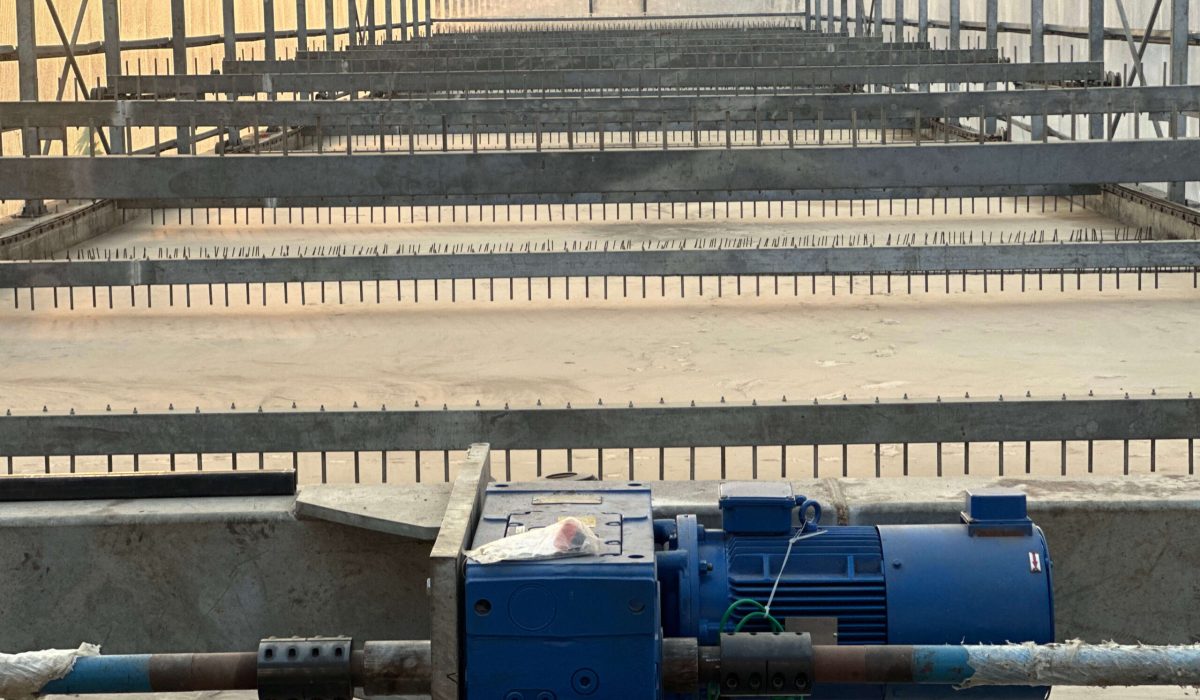
Project Overview
Industry: Common Effluent Treatment Plant (Textile Cluster)
Sludge Type: CETP mixed biological + chemical sludge
Capacity: 160–200 TPD (wet sludge)
Technology: Hybrid System (Solar Sludge Dryer + Multi-Layer Mesh Belt Dryer)

Facts and Figures
Sludge Generation: 160–200 TPD
Input Moisture: ~75–80%
Output Dryness: Up to 85–90% DS
System Type: Hybrid (Solar + Waste Heat + Thermal)
Integration: Existing sheds utilized
Energy Source: Waste heat + solar
The CETP Sludge Drying Challenge
- Extremely high sludge generation (one of the largest CETP loads)
- High moisture content leading to massive disposal volumes
- Existing sludge storage sheds already constructed (fixed layout constraint)
- Severe space limitation despite high load
- Lack of sufficient thermal energy for full thermal drying
- Need for consistent drying for handling and co-processing
- Odour control critical due to surrounding communit
The Solution
- Implementation of hybrid drying approach: Solar drying for bulk load handling and MLMB dryer for controlled thermal drying
- Integration within existing sludge storage sheds (no major civil expansion)
- Waste heat utilization from aeration blowers (~95°C air)
- Dual heat exchange system (air-air + air-water)
- Solar parabolic concentrators for supplementary heating
- Automated sludge handling system with silo storage
Results & Benefits
- Massive reduction in sludge volume sent to landfill
- Significant reduction in disposal cost
- Conversion of sludge into alternative fuel for cement industry
- Optimal utilization of existing infrastructure
- Low OPEX due to renewable + waste heat integration
- Controlled odour and improved environmental compliance
✓
Why the Solar + Multi Layer Mesh Belt Dryer?
There was not enough thermal energy for full thermal drying and not enough space for solar alone. Solar drying takes the bulk load, while a mesh belt dryer running on ~95°C waste heat from the aeration blowers delivers controlled final drying. Explore the Solar + Multi Layer Mesh Belt Dryer →FAQs
CETP Sludge Drying: Frequently Asked Questions
Can CETP sludge drying use waste heat?
Yes. At NTIEM, ~95°C air from the aeration blowers is recovered through a dual heat exchange system and used in the mesh belt dryer, keeping operating costs low.
What happens to the dried CETP sludge?
It is converted into alternative fuel for the cement industry, greatly reducing landfill disposal. CETP sludge must be managed under CPCB and SPCB rules.
Did the project need new civil works?
No major expansion. The system was integrated within the existing sludge storage sheds.

Get Started
Ready to Transform Your Sludge Management?
Get a customized solution tailored to your plant capacity.