
Are We Really Turning Waste Into Agricultural Value?
Sewage sludge, often referred to as biosolids after treatment, has long been used as a fertilizer across the world to improve crop yields and reduce dependency on chemical fertilizers. While this practice offers economic and environmental advantages, it also raises growing concerns about soil contamination, heavy metals, and long-term health impacts.
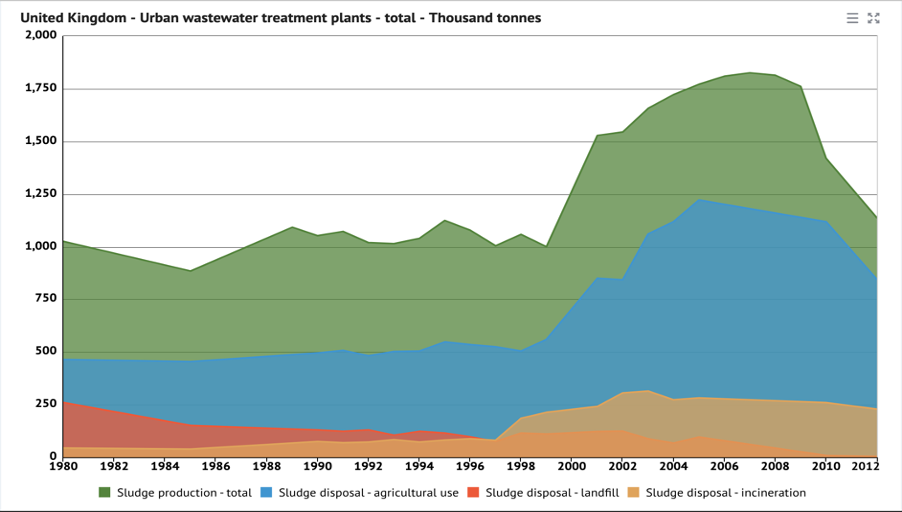
The United Kingdom has emerged as one of the most structured examples of large-scale sludge recycling through agricultural land application. Today, nearly 80% of the sewage sludge generated in the UK is reused in agriculture under a tightly regulated framework.
The UK Biosolids Model
Since the 1980s, the UK has steadily reduced landfill disposal of sewage sludge to almost zero due to increasing environmental and public health concerns. Following the Water Industry Act of 1991, ten private Water and Sewerage Companies (WASCs) became responsible for sewage treatment and sludge management. Agricultural land application soon became the preferred disposal and recycling route.
In 1989, the Sludge for Agriculture Regulations created favorable conditions for biosolids use in farming. Studies conducted by DEFRA between 2003 and 2006 showed that low-metal-content sludge improved soil respiration and microbial biomass, supporting healthier soil ecosystems.
Key Numbers Behind UK Biosolids Recycling
- Approximately 3.6 million tonnes of biosolids are recycled to agricultural land annually in the UK.
- This material is applied across nearly 150,000 hectares of farmland every year.
- The nutrient value of biosolids to UK agriculture is estimated at around £25 million annually.
- Farmers benefit from nutrient savings worth nearly £170 per hectare.
The process is strictly monitored through government regulations, testing requirements, and operational standards. The UK government has also published detailed guidance and compliance frameworks for stakeholders involved in biosolids production and land application.

Benefits of Agricultural Sludge Use
- Reduces dependency on landfill disposal
- Decreases reliance on chemical fertilizers
- Improves soil organic content and microbial activity
- Supports circular economy practices
- Provides economic value to farmers and operators
The Risks and Concerns
Despite its advantages, untreated or poorly regulated sludge application can create long-term environmental risks. Heavy metals and hazardous chemicals can accumulate in soil, contaminate groundwater, and potentially enter the food chain.
Modern wastewater streams may contain between 80,000 and 100,000 different chemical compounds from household, industrial, and pharmaceutical sources. Several scientific studies and regulatory agencies, including the US EPA, continue to evaluate the long-term impacts of these substances on human health and ecosystems.
What Can the World Learn From the UK?
The UK demonstrates that biosolids recycling can work effectively when supported by strict regulation, transparent monitoring, scientific testing, and public education. Strong guidelines for treatment, transport, testing, and land application are essential to reduce environmental risks.
As countries continue exploring circular economy models and sustainable waste management practices, biosolids recycling will likely remain an important solution. However, long-term environmental safety and responsible governance must remain central to its implementation.
