
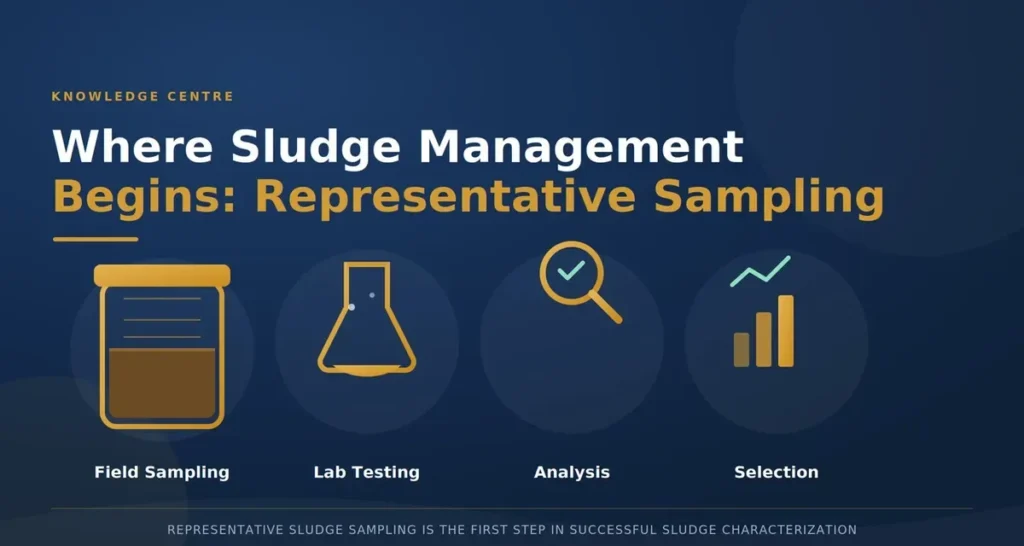
A plant spends several crores on a dewatering or drying system. Months later the cake is still wet, polymer use keeps climbing and the dryer never reaches its target. In most of these cases the machine is not the root problem: nobody tested the sludge properly before choosing it. Sludge characterization is the step that prevents this. It tells you how your sludge will behave in a press, a dryer, a truck and at the disposal site, before you commit money to any of them.
Two plants in the same industry can produce sludge with different physical, chemical and biological properties. Raw materials, chemical dosing, the treatment process and operating conditions all change how sludge thickens, dewaters, dries and travels. That is why experienced engineers start with the sludge, not with a machine catalogue.
Good testing answers practical questions. Can this sludge be dewatered mechanically, and with which technology? Is thermal or solar drying needed, and how much polymer will it take? Is it hazardous waste, and which disposal or reuse routes are open? This guide covers what to measure, how to read the results, what Indian rules require, and how the findings shape technology choice.
New to the subject? Our industrial sludge management guide explains how sludge is generated, treated, dewatered, dried and disposed of.
Why sludge characterization matters
A tailor who never takes your measurements may still stitch a fine suit, but it is unlikely to fit. Treatment equipment works the same way: however good the machine, it will not perform consistently if it was not selected for the sludge it has to process.
Many projects still size equipment on weak data:
- historical operating data that no longer reflects current wastewater;
- vendor assumptions based on industry type, or data borrowed from a neighbouring plant;
- moisture content as the only design parameter;
- a single laboratory report collected years earlier.
The result is oversized or undersized equipment, high polymer consumption, low throughput, heavy maintenance and disappointing cake quality. Sludge characterization reduces these risks by putting objective data on the table before the investment decision.
What is sludge characterization?
Sludge characterization is the systematic evaluation of the physical, chemical, biological and mechanical properties of sludge. Its purpose is to predict how the sludge will behave during handling, dewatering, drying, transport, disposal or resource recovery. Put simply, it tells you what kind of sludge you are dealing with.
More than a moisture test
A common mistake is to treat moisture content as enough. Moisture matters, but it is only part of the picture. Two sludges at 80% moisture can behave quite differently: one forms a firm cake with little polymer, the other stays sticky, hard to dewater and expensive to transport. The difference lies in the rest of the sludge’s properties.
The four groups of properties
- Physical: moisture, total solids, density, particle size, viscosity, temperature, colour and texture. These govern pumping, thickening, dewatering, drying and transport.
- Chemical: pH, organic matter, nutrients, heavy metals, oil and grease, salinity and inorganic compounds. These drive polymer choice, corrosion, compliance and the disposal route.
- Biological: volatile solids, microbial activity, pathogens, stability and biodegradability. These predict odour, digestion performance and stabilisation needs.
- Mechanical: compressibility, filterability, capillary suction time (CST), specific resistance to filtration (SRF) and shear sensitivity. These often decide whether sludge is easy or hard to dewater.
Where testing fits in a project
Projects often run in this order: budget, vendor quotations, equipment selection, then sludge testing. That order is backwards. The engineering sequence should be:
- wastewater analysis;
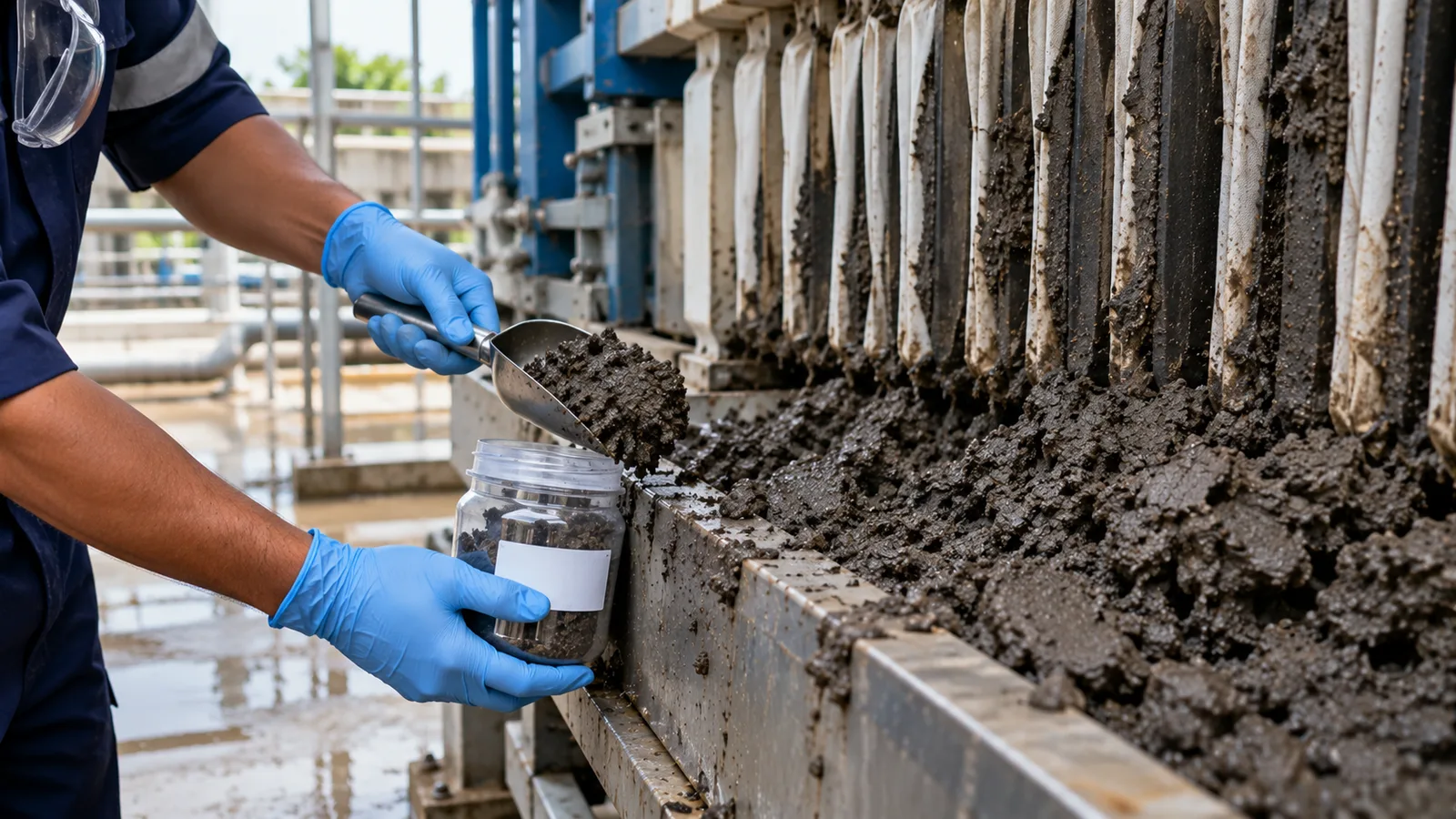
- representative sludge sampling;
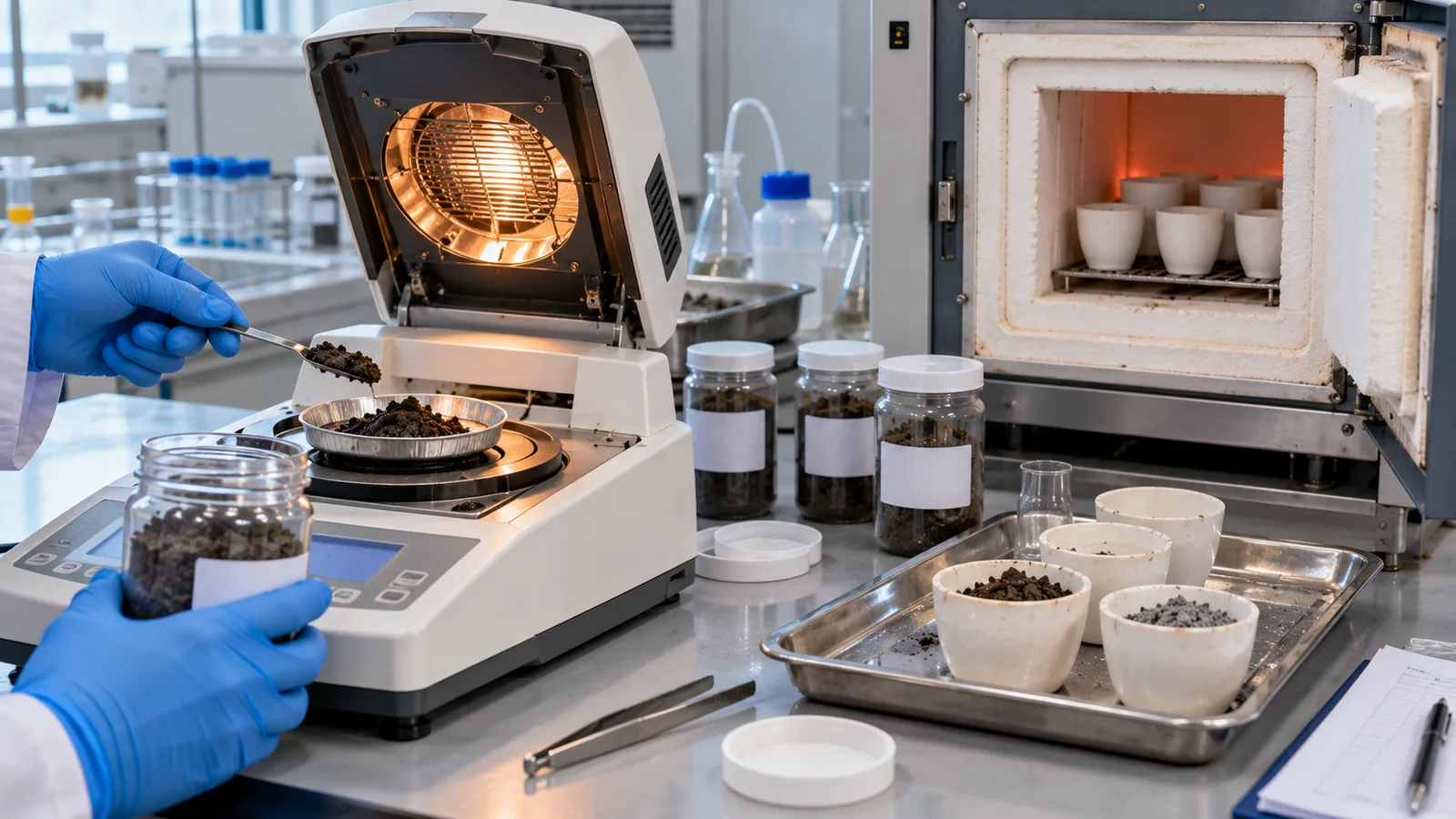
- laboratory testing and data interpretation;
- pilot testing, where the project justifies it;
- technology selection and detailed design;
- equipment procurement.
Each stage depends on the quality of the data gathered at the start. Skipping the early steps adds uncertainty and usually raises lifecycle cost.
Key parameters engineers measure
A laboratory report full of numbers is of little use unless each result can be tied to a decision. The table below lists the parameters engineers check most often, what each one tells you and which decision it feeds.
| Parameter | What it tells you | Decision it drives |
|---|---|---|
| Moisture content | How much water you are paying to handle, transport and evaporate. It does not show how easily that water comes out. | Need for thickening; whether thermal or solar drying is needed; transport and disposal cost estimates |
| Total solids (TS) | Everything left after the water is removed: organics, minerals, biomass, chemical precipitates. The basis of the dry-solids load. | Equipment capacity and throughput; storage; disposal logistics |
| Volatile solids (VS) | The organic fraction (weight lost on ignition). High VS means more biological activity, odour potential and energy content. | Digestion or composting potential; stabilisation strategy; energy recovery |
| Fixed solids / ash | The inorganic fraction: sand, clay, metal oxides, lime, precipitates. High values mean abrasion and more weight to dispose of. | Wear protection and material selection; maintenance planning; co-processing suitability |
| Particle size distribution | Coarse particles release water easily; fine biological solids hold on to it. | Thickening and dewatering technology; polymer choice |
| Density (specific gravity) | The relationship between sludge mass and volume. | Pump and pipeline sizing; tank capacity; transport calculations |
| pH | Acidity or alkalinity, which affects polymer performance, corrosion and biological stability. | Polymer chemistry and conditioning; materials of construction |
| Oil and grease | Oils, fats, waxes and hydrocarbons that make sludge sticky, foul screens and raise polymer demand. | Pretreatment; polymer optimisation; dryer type and cleaning regime |
| Heavy metals | Concentrations of chromium, nickel, zinc, copper, lead, cadmium and similar metals. | Hazardous waste classification; landfill or co-processing acceptance |
| Calorific value | The energy content of dried sludge. | Whether the dried product can go as alternative fuel or must be landfilled |
| Compressibility | How the sludge responds to rising pressure. Highly compressible sludge can trap more water when squeezed harder. | Filter press suitability; pressure settings; cycle time |
| Filterability | How easily water passes through the sludge during filtration. | Equipment selection; cycle time and throughput; process economics |
| Capillary suction time (CST) | How fast water leaves the sludge into filter paper. Lower CST generally means easier dewatering. | Polymer screening; comparing conditioning options |
| Specific resistance to filtration (SRF) | How strongly the sludge resists mechanical filtration. Higher SRF means longer cycles and more energy. | Filter press sizing; pilot testing priorities |
Free water and bound water. Always ask how much of the moisture is free and how much is bound. Of two sludges at 80% moisture, the one with more bound water will be much harder to dewater mechanically and will lean on drying instead.
CST and SRF are comparative tools. A single CST or SRF value is neither good nor bad. Their real value is in comparing conditions, for example testing several polymers to see which gives the biggest improvement. Once you know these mechanical properties, the next question is which machine suits them. Our screw press vs filter press comparison covers that choice.
Is it hazardous waste? Regulatory characterisation in India
For industrial sludge, the laboratory report has a second job: deciding whether the sludge is hazardous waste, and therefore where it may legally go. Under the Hazardous and Other Wastes (Management and Transboundary Movement) Rules, 2016, a waste is hazardous if it appears in Schedule I. It is also hazardous if its constituents meet or exceed the Class A or Class B limits in Schedule II, or if it shows the Class C characteristics.
- Schedule I (process-based): lists processes that generate hazardous waste. Entry 35.3 is “chemical sludge from waste water treatment” and entry 37.1 is “sludge from wet scrubbers”. A footnote allows Schedule II to be used to show that a listed waste is not hazardous.
- Schedule II, Class A (leachable limits): based on the Toxicity Characteristic Leaching Procedure (TCLP), using USEPA Method 1311. Lead and arsenic, for example, have a limit of 5.0 mg/l.
- Schedule II, Class B (total limits): based on total threshold concentration; total petroleum hydrocarbons, for example, are limited to 5,000 mg/kg.
The Rules also say the constituents analysed should be relevant to the nature of the industry and the materials used. So a textile ETP and an electroplating unit should not run the same test list. Rule 4 sets the order of preference for the occupier: prevention, minimisation, reuse, recycling, recovery and utilisation including co-processing, and only then safe disposal.
What a TSDF tests before it accepts your sludge
CPCB’s protocol for common hazardous waste TSDFs (2009) asks the facility to fingerprint each waste. The checks include moisture (loss on drying at 105°C), organic content (loss on ignition at 550°C), pH, reactive cyanide and sulphide, and a paint filter liquid test. The comprehensive analysis adds a TCLP leachate test for landfillable wastes, oil and grease, and calorific value for organic wastes.
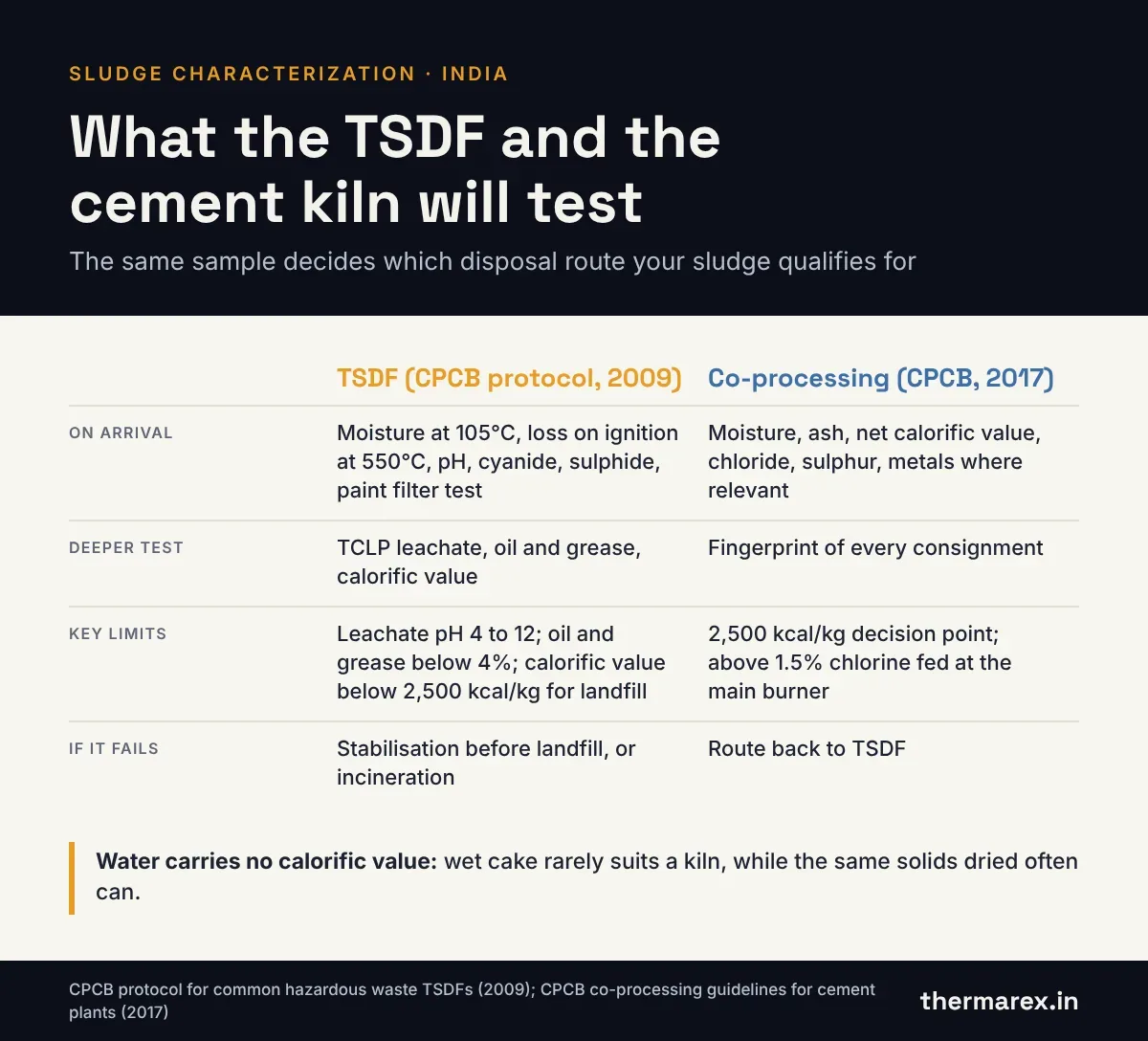
For direct landfill, the protocol sets limits such as leachate pH of 4 to 12 and oil and grease below 4% by weight. It also notes that the calorific value of landfillable hazardous waste should be less than 2,500 kcal/kg. Waste that fails these checks is routed to stabilisation before landfill, or to incineration.
Co-processing: when dried sludge becomes fuel
CPCB’s guidelines for co-processing in cement plants (July 2017) require a fingerprint analysis of every consignment. It covers moisture, ash, net calorific value, chloride and sulphur, plus heavy metals where the source sector suggests them. The acceptance chart in those guidelines uses a gross calorific value of 2,500 kcal/kg as a decision point. Wastes with more than 1.5% chlorine are to be fed at the main burner.
This is where drying and testing meet. Water carries no calorific value, so wet cake rarely suits co-processing, while the same solids dried can. Which route your sludge qualifies for, and at what cost, is a matter of test results, not assumption. Our sludge recycling and disposal services team works through these routes with plants, and our article on industrial sludge disposal cost explains how the route drives the bill.
Laboratory testing vs pilot testing
Plenty of projects stop at laboratory analysis, which is often not enough. Think of lab testing as the diagnosis and pilot testing as trying the treatment.
- Laboratory testing tells you composition, moisture, solids, pH, filterability, polymer response and mechanical properties.
- Pilot testing predicts real cake solids, throughput, polymer consumption, energy use, operator effort, maintenance needs and lifecycle cost.
The most reliable equipment decisions use both. For large or high-value projects, a pilot is worth the time.
How engineers interpret the results
Data only becomes useful once it is turned into decisions. A moisture figure on its own does not pick a dewatering technology. It has to be read with solids, particle size, compressibility, filterability, sludge production rate, disposal cost and the plant’s goals. The interaction between parameters often matters more than any single value.
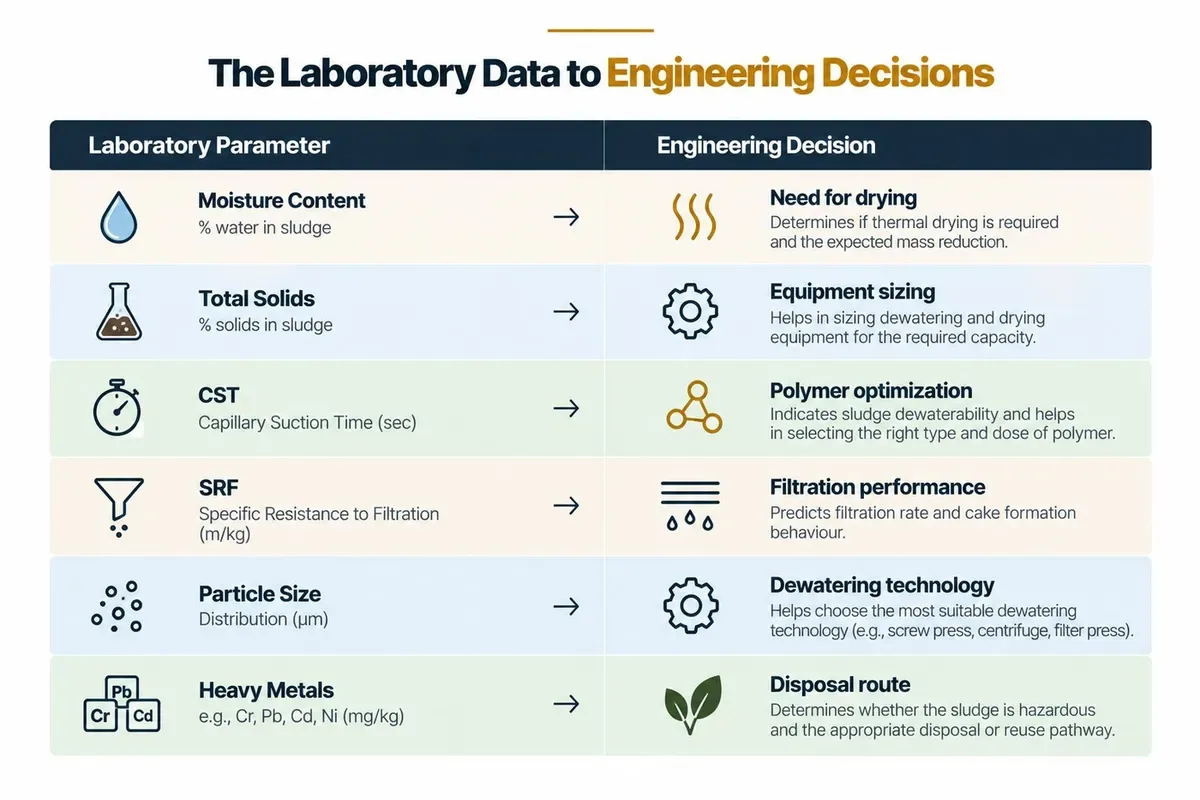
The three cases below are illustrations, not results from a particular plant.
Case A: wet, but releases water easily
Suppose a sludge tests at over 80% moisture but has low CST, low SRF and coarse particles. Despite the high moisture, it gives up water readily. Mechanical dewatering, such as a screw press or belt press with tuned polymer, will probably do the job, and drying may not be needed.
Case B: drier on paper, hard to dewater
Now take a sludge with slightly lower moisture, but high CST, high SRF, fine biological solids and high compressibility. It looks drier on paper yet is much harder to dewater, and more pressure alone will not lift cake solids. The next steps are polymer trials, a pilot, a filter press evaluation and a look at the biological treatment upstream.
Case C: inorganic chemical sludge
A sludge high in inorganic solids and heavy metals, dense, with low volatile solids, offers little scope for digestion or energy recovery. The priorities become solids capture, the TCLP result and a compliant disposal route.
When performance drops after the right equipment is installed, changing sludge properties are a common cause. Our guide to sludge dewatering problems explains how to trace them.
Our sludge characterization framework
Every sludge project should begin with a structured workflow rather than a machine shortlist. This is the sequence we follow.
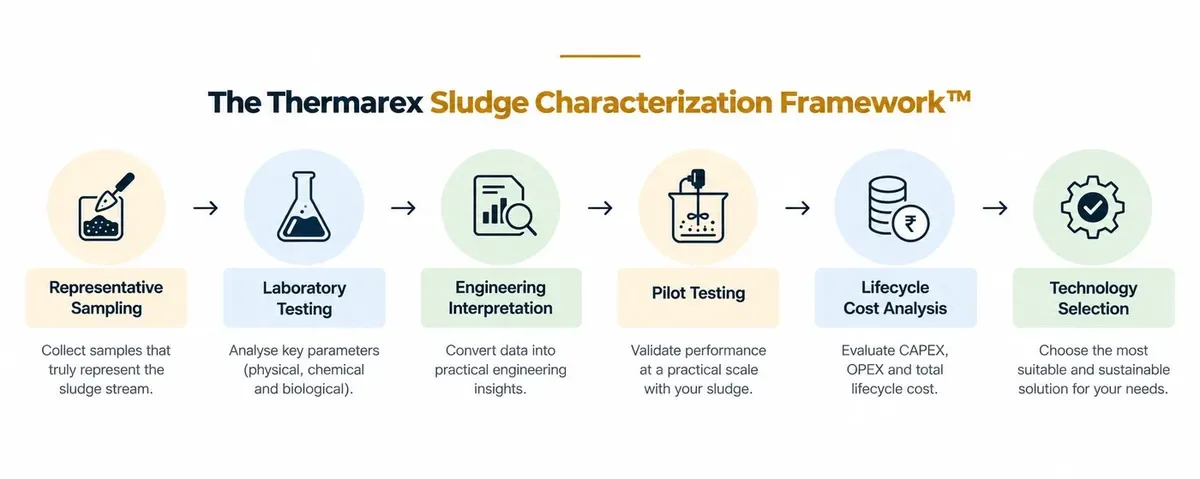
- Representative sampling. Collect samples that reflect normal operation, across shifts and seasons where the stream varies.
- Laboratory analysis. Measure physical, chemical, biological and mechanical properties, plus the regulatory tests the disposal route will demand.
- Engineering interpretation. Turn data into answers: can it be thickened, which dewatering technology suits it, is drying justified, which polymers to trial.
- Pilot testing. Where the project value justifies it, confirm the lab findings on pilot-scale equipment.
- Lifecycle cost. Compare options on capital, energy, polymer, labour, maintenance, disposal and future expansion.
- Technology selection. Only now choose the equipment.
Common mistakes in sludge testing
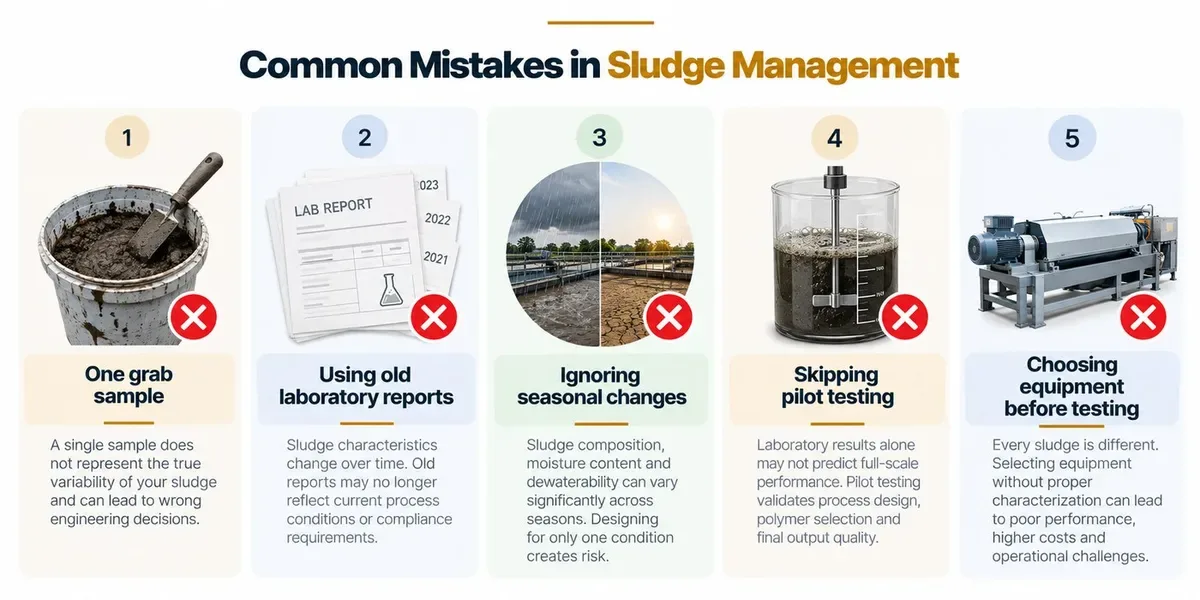
- One grab sample. A single sample rarely represents normal operation, especially where wastewater varies through the day.
- Old laboratory reports. Changes in raw materials, production or treatment can alter sludge significantly over time.
- Ignoring seasons. Production cycles, raw materials, biological performance and the monsoon all change sludge through the year.
- Judging on one parameter. Selecting equipment on moisture alone ignores filterability, compressibility and composition.
- Assuming an industry norm. There is no “typical textile sludge”. Each plant produces its own.
- Choosing equipment before testing. Selection should follow sludge characterization, never the other way round.
How sludge properties shaped two Thermarex projects
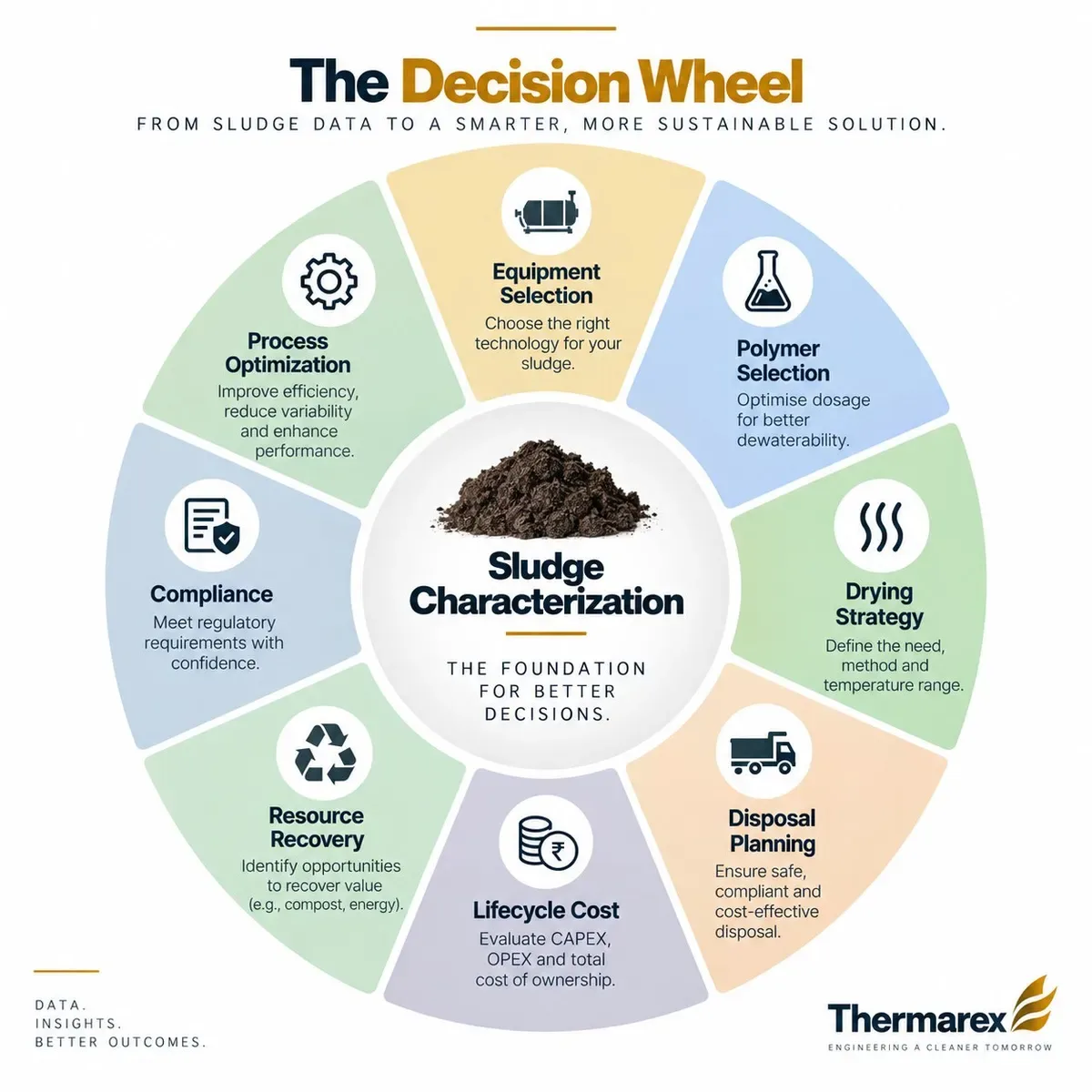
The value of knowing your sludge shows clearly when two different streams are set side by side.
Oily hazardous sludge, Cairn India, Barmer. The site generates about 1.1 TPD of oily hazardous sludge at 80–90% moisture. We installed a steam-heated hollow shaft paddle dryer, an enclosed, indirect-heat unit with a footprint of only 10–15 m². It brings the sludge below 10% moisture, and as low as 5%. An oily, hazardous stream of small daily volume is a natural fit for a closed, compact dryer rather than an open drying hall. Details are in the Cairn India case study.
Textile park sludge, Brandix SEZ, Visakhapatnam. Here about 10 TPD of segregated sludge is dried on 100% solar energy to up to 85–90% dry solids, with odour control. The dried fraction is used as alternative fuel. A solar sludge dryer handled the larger daily volume, and sending dried sludge as fuel is exactly the kind of route that depends on tested calorific value, ash and chloride. See the Brandix SEZ case study.
Different sludges lead to different dryers and different end routes. Neither choice could have been made from moisture content alone.
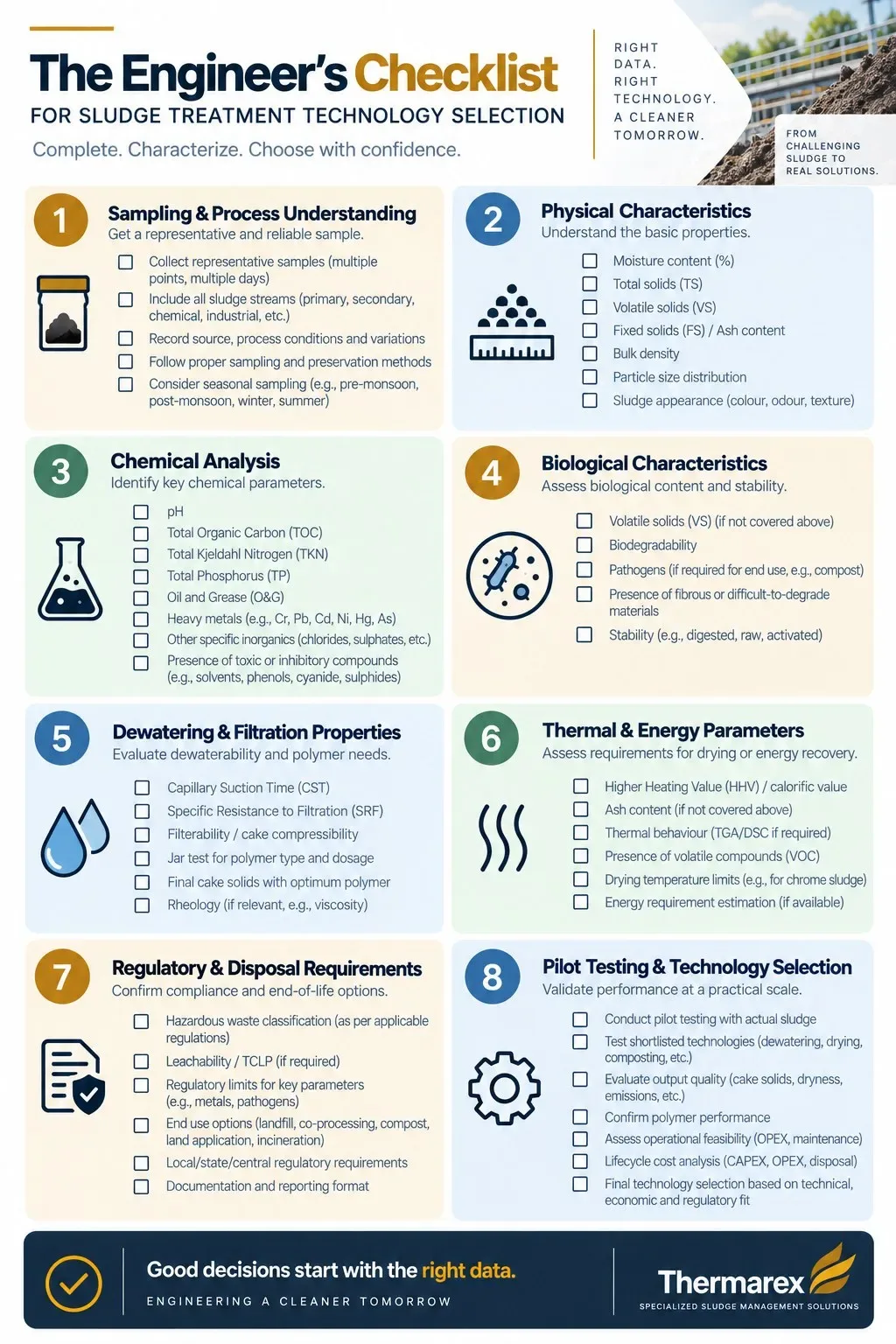
Sludge characterization checklist
Before you ask for quotations, confirm that the items below are done. Save or print the checklist for your next project review.
Frequently asked questions
What is sludge characterization?
It is the systematic testing of sludge’s physical, chemical, biological and mechanical properties. It predicts how the sludge will behave in dewatering, drying, transport and disposal, so equipment and routes are chosen on data, not assumption.
Is moisture content enough to select equipment?
No. Two sludges at the same moisture can dewater very differently. Moisture must be read alongside solids, particle size, compressibility, filterability, CST and SRF.
How do I know if my ETP sludge is hazardous waste?
Under the Hazardous and Other Wastes Rules 2016, first check whether your process appears in Schedule I; chemical sludge from wastewater treatment is entry 35.3. Then test the constituents relevant to your industry against the Schedule II limits, which include TCLP leachate limits.
What tests does a TSDF or cement plant ask for?
A TSDF fingerprints each waste for moisture, loss on ignition, pH, reactive cyanide and sulphide and free liquids, and uses a TCLP test and calorific value for landfill acceptance. A cement plant co-processing waste checks moisture, ash, calorific value, chloride and sulphur for each consignment.
How often should sludge be tested?
Whenever wastewater composition, raw materials or the treatment process change significantly, across seasons including the monsoon, and periodically as part of routine process review.
Does every project need pilot testing?
Not always, but it is strongly recommended for large or high-value projects, because it confirms cake solids, throughput and polymer use under real operating conditions.
Start with the sludge
Sound sludge management begins long before equipment arrives on site. Plants that invest in representative sampling, laboratory analysis, careful interpretation and pilot validation make better technology decisions than those working from assumptions. Ask what your sludge is telling you before you ask which machine to buy.
Planning a sludge treatment upgrade? Send us your sludge data or talk to us about testing. Our engineers will help you read the results and compare dewatering, drying and disposal options on lifecycle cost.
Talk to a Thermarex engineerSources: MoEFCC, Hazardous and Other Wastes (Management and Transboundary Movement) Rules, 2016; CPCB, Protocol for Performance Evaluation and Monitoring of Common Hazardous Waste TSDFs (2009); CPCB, Guidelines for Pre-Processing and Co-Processing of Hazardous and Other Wastes in Cement Plant (July 2017); Thermarex case studies (Cairn India, Brandix SEZ).
