
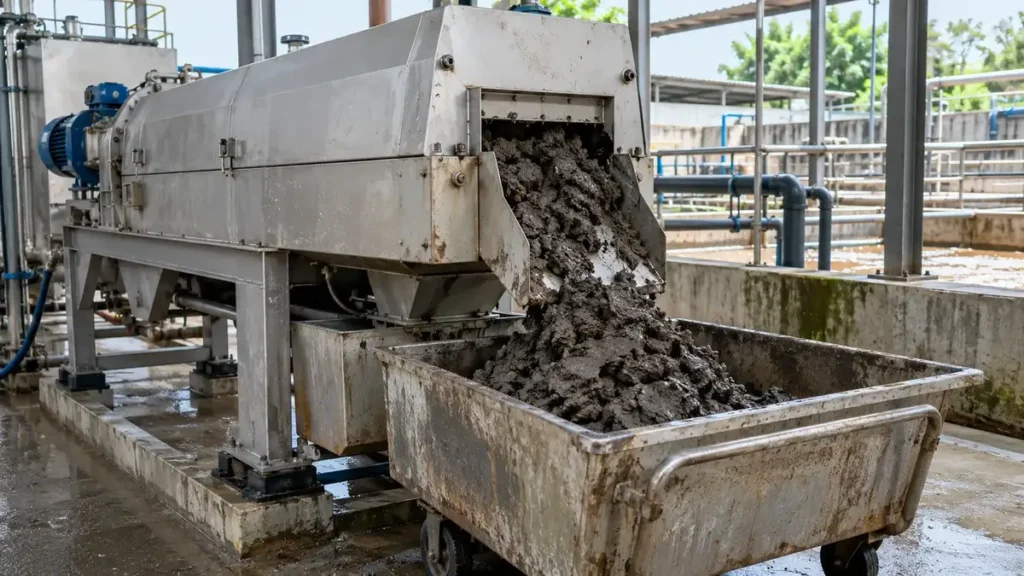
The cake coming off your press is wetter than it used to be, polymer consumption keeps creeping up, and throughput has dropped. Operators retune the machine every shift, disposal bills rise, and yet nothing looks broken. Most sludge dewatering problems develop this way, slowly, with the cause sitting somewhere upstream of the machine.
Dewatering is the result of everything that happens before it: wastewater characteristics, biological treatment, thickening, conditioning, maintenance and operator practice. Replacing a screw press with a filter press, or just adding more polymer, rarely fixes a problem that started in the aeration tank or the production block. This guide sets out the twelve causes we see most often, how to diagnose each one, and what to change first.
If you are new to the subject, start with our complete guide to industrial sludge management, which explains how sludge is generated, dewatered, dried and disposed of.
Before you blame the equipment
A wet cake does not automatically mean a bad machine. A doctor treating a fever looks for the cause before prescribing surgery, and sludge deserves the same approach. A dewatering machine separates water from solids according to the properties of the sludge it receives. When those properties change, its output changes too, and a new machine fed the same sludge will often disappoint.
So begin with a few plain questions. Has the sludge changed? Has production, the wastewater or the chemical dosing changed? Has sludge age shifted? Has maintenance slipped, or have operators changed how they run the unit? Only once these are answered is it fair to judge the equipment.
How to diagnose sludge dewatering problems in five steps
When performance falls, resist the urge to change several variables at once. Work through the same sequence every time:

- Define the symptom. Wet cake, high polymer use, low throughput, solids in the filtrate, frequent blockages or rising downtime. Different symptoms point to different causes, and one symptom can have several.
- Review the last three to six months. Compare daily sludge production, feed solids, polymer dose, cake solids, disposal quantities and plant output with your historical records. Gradual drifts are easy to miss day to day but obvious on a trend.
- Work upstream. Follow the sludge path: wastewater process, biological treatment, thickening, conditioning, then dewatering. The machine cannot correct poor upstream conditions.
- Check machine health. Screens, belts, screw flights, bearings, hydraulic pressure, wash-water systems, drives and instruments.
- Optimise before you upgrade. Only after the first four steps should replacement be considered. Many plants restore performance without new capital spend.
Cause 1: Your sludge has changed, even if your equipment hasn’t
This is the most overlooked cause of sludge dewatering problems. Plants assume that because the machine is the same, the sludge must be too. Sludge characteristics shift with new production lines, different raw materials, a changed product mix, new cleaning or treatment chemicals, higher wastewater flow and adjustments to the biological process.
An illustrative scenario: suppose a food plant switches to a new cleaning detergent. The wastewater chemistry changes, biological flocs form less well, and the sludge becomes finer and holds more water. Operators see a wetter cake and raise the polymer dose, perhaps doubling it over a few months, with little gain in dryness. The polymer was never the problem. The sludge was.
Warning signs: performance worsening over weeks or months, rising polymer demand, settings that need constant adjustment, and sludge or cake that looks or feels different.
What to do: analyse the sludge and compare the results with historical lab data, check what has changed in production, and run fresh polymer trials. Our guide to sludge characterisation lists the tests that matter. One analysis often saves weeks of trial-and-error.
Cause 2: Poor thickening is overloading the dewatering unit
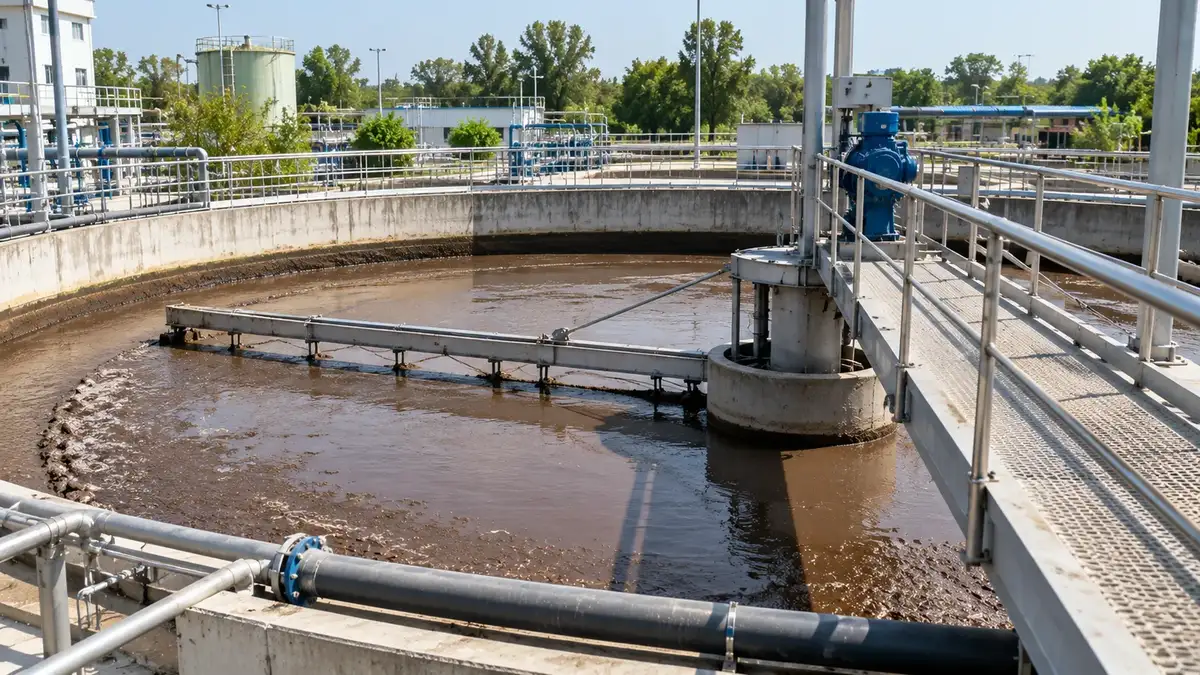
Many sludge dewatering problems start in the thickener. Every dewatering machine is designed for a feed within a certain solids range. If the sludge arrives too dilute, the machine has to remove far more water than it was sized for. The result is lower throughput, a wetter cake, more polymer and faster wear.
Think of a washing machine’s spin cycle. Skipping it does not make the tumble dryer stronger. It only gives the dryer more work. The thickener is your spin cycle.
Poor thickening usually comes from bad settling, hydraulic overloading, short retention time, irregular sludge withdrawal or a neglected thickener. You will see very dilute feed, higher pumping volumes and a wet cake even though the machine seems to be running normally.
What to do: measure feed solids, check sludge blanket levels and retention time, and verify the withdrawal schedule before touching press settings. A well-run thickener lightens the load on every downstream step, and fixing it is often one of the cheapest improvements available.
Cause 3: The wrong polymer, or too much of it
When the cake gets wetter, the first reaction is usually to add more polymer. It seems logical, but conditioning is rarely that simple. Polymer bridges fine particles into larger, stronger flocs that release water under pressure. When the chemistry matches the sludge, this works well. When it does not, extra dose only adds cost.
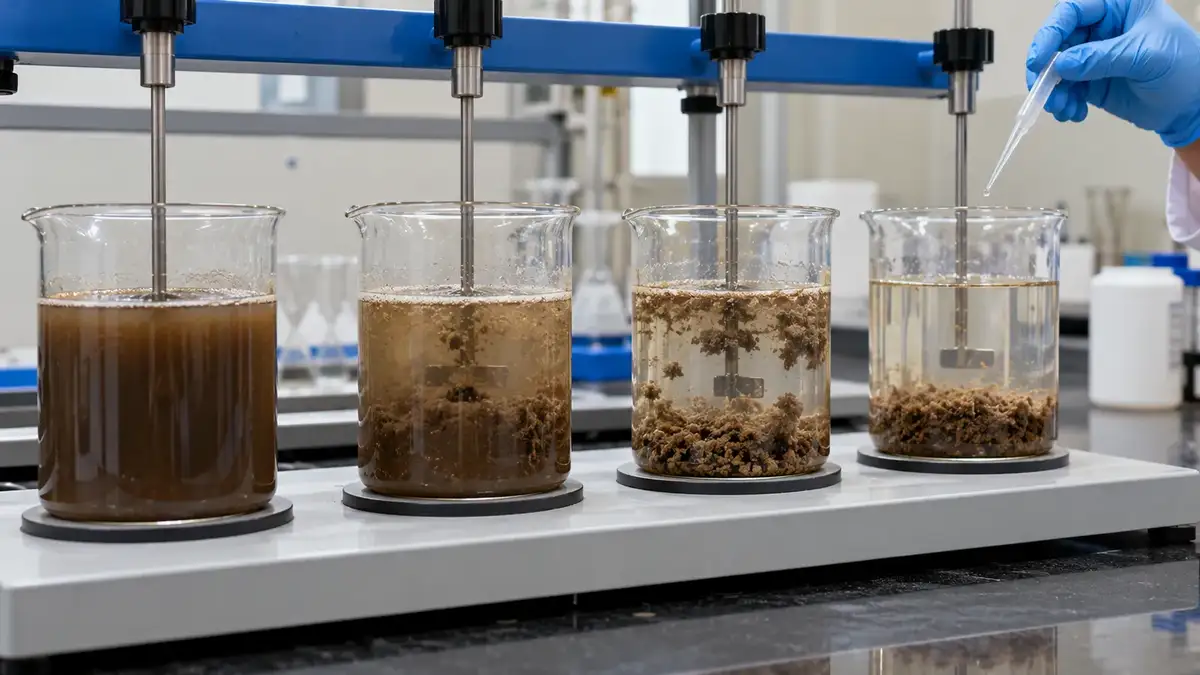
Signs of the wrong polymer include higher use with little gain in cake solids, sticky cake, polymer carry-over in the filtrate and fouled screens or cloths. Overdosing brings its own problems: slimy sludge, poorer water release, inconsistent cake and blinded filter media.
Preparation matters as much as product. The US EPA’s belt filter press fact sheet notes that turbulent mixing can shear the floc and reduce polymer effectiveness, and that dilution and ageing systems must be large enough to optimise polymer use.
What to do: run regular jar tests, re-optimise polymer type and concentration whenever the sludge changes, and check make-up and ageing procedures. Treat polymer optimisation as routine work, not a one-time commissioning task.
Cause 4: Your biological process is producing hard-to-dewater sludge
Biological sludge changes with operating conditions. Sludge age, microbial population, dissolved oxygen, nutrient balance and loading all shape the floc. Healthy, compact flocs release water reasonably well; loose or filamentous flocs trap it. The EPA fact sheet’s typical belt press data show the gap: raw primary sludge reaching 28–44% cake solids against 20–35% for raw waste activated sludge.
Common culprits are excessive sludge age, bulking and filamentous bacteria, poor nutrient balance, shock loads and low dissolved oxygen. Warning signs are light, fluffy sludge, worsening settling, gradually rising polymer demand and unstable cake.
What to do: look at the biological system, not only the press. Review sludge age, sludge volume index (SVI), dissolved oxygen, food-to-microorganism ratio and mixed liquor characteristics. A more stable biological process produces stronger flocs that need less conditioning.
Cause 5: You are trying to remove bound water mechanically
This is one of the commonest reasons plants feel let down by a new screw press, filter press or centrifuge. The machine performs exactly to specification, yet the cake is wetter than expected. The limit is the physics of the sludge, not the machine.
Water in sludge exists in several forms: free water, water trapped inside the flocs, water held on particle surfaces, and chemically bound water. A widely cited review in Water Research by Vaxelaire and Cézac notes that free water can be removed by mechanical stress, while the bound fraction is what remains afterwards. Squeeze a wet sponge and the first press releases plenty of water; squeeze harder and very little more comes out.

The symptoms are easy to spot: more pressure or longer cycles make almost no difference, operators adjust settings without success, and cake dryness reaches a plateau.
What to do: confirm that the remaining moisture is mostly bound water, decide whether your disposal route really needs a drier product, and compare the cost of more mechanical effort with a drying stage. A well-chosen multi screw press gets you to the mechanical limit; beyond that, the economical step is usually a solar sludge dryer where land is available, or a compact hollow shaft paddle dryer where space is tight or steam is on hand.
At Bhilosa Industries in Silvassa, dewatered paint and chemical ETP sludge arrives at our automated solar dryer at about 80% moisture. Over roughly 940 m² it brings 4.5–5 tonnes a day down to 10% moisture or less, using about 10–15 kWh a day. Our solar sludge drying guide explains how such plants are sized, and our comparison of screw press vs filter press covers the mechanical side.
Cause 6: The machine is fed too fast
Overfeeding is a common source of sludge dewatering problems at peak production. Throughput looks like productivity, but every machine has an optimum range. Push the feed beyond it and the sludge spends less time inside, water has less chance to separate, and you get wetter cake and poorer solids capture. More wet tonnes then have to be transported and disposed of, so the apparent gain disappears.
Watch for cake dryness falling during peak production, more solids in the filtrate, overflow, higher vibration and frequent operator adjustments.
What to do: compare the actual feed rate with design capacity, then step the feed down gradually while logging cake solids at each rate. Many machines give a noticeably drier cake when run somewhat below nameplate maximum. Your own trend data, not a rule of thumb, will show where the best balance between throughput and cake quality lies.
Cause 7: Maintenance has slipped
Dewatering equipment works with abrasive solids, chemicals and constant load, so wear is inevitable and gradual. Operators often compensate with more polymer or different settings without realising that worn parts are the problem. By the time maintenance happens, chemical costs may already have climbed.
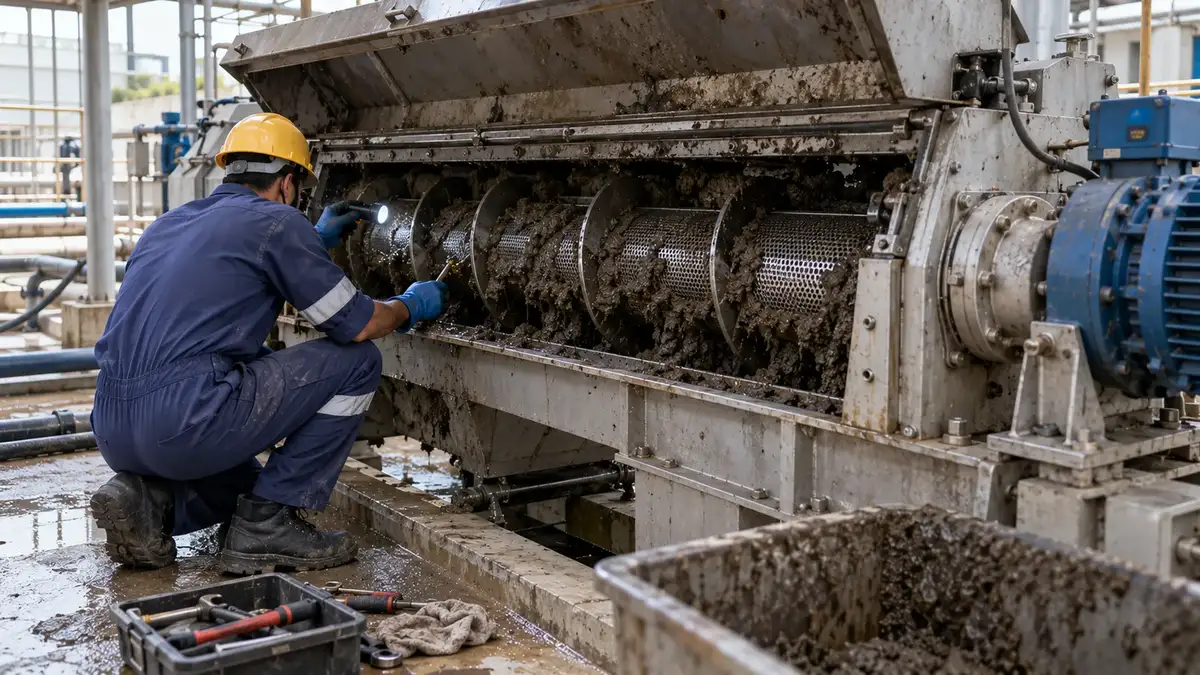
Typical wear points are screw flights, filter cloths, screens, belts, bearings, rollers, seals, hydraulics and spray nozzles. Even partly blocked wash-water nozzles let media clog over time; the EPA fact sheet recommends cleaning belts with high-pressure wash water at the end of each shift.
What to do: move from reactive to preventive maintenance, with inspections scheduled on operating hours. Track wear parts, lubrication, belt tension, screen condition, hydraulic pressure and wash-water performance. Watch for declining cake dryness, unusual vibration, rising power draw and uneven discharge.
Cause 8: The feed is inconsistent
Dewatering machines perform best on a steady feed, yet many plants deliver sludge in variable batches. Feed solids, flow and quality swing through the day with irregular withdrawal, batch production, uneven thickener operation or pumping interruptions. The EPA fact sheet notes that belt presses need more operator attention when feed solids concentration or organic content varies.
A hypothetical example: a textile unit concludes its screw press is undersized because throughput has fallen. Investigation shows the thickener is being drawn off irregularly, so the press sees thick and thin sludge by turns. Steadying the withdrawal and feed solids restores throughput without a new machine.
What to do: stabilise the process rather than chasing settings. Feed equalisation tanks, automated flow control, fixed withdrawal schedules and better coordination with the upstream team all help.
Cause 9: Seasonal changes are affecting the sludge
Many plants see dewatering change through the year with nothing changed in operation. Temperature affects biological activity, sludge viscosity and polymer performance. In India the monsoon is the big one. Stormwater ingress dilutes the influent, hydraulic loading on clarifiers and thickeners rises, and feed solids drop just when humidity also makes open storage and drying harder. Production schedules and raw material quality can shift seasonally too.
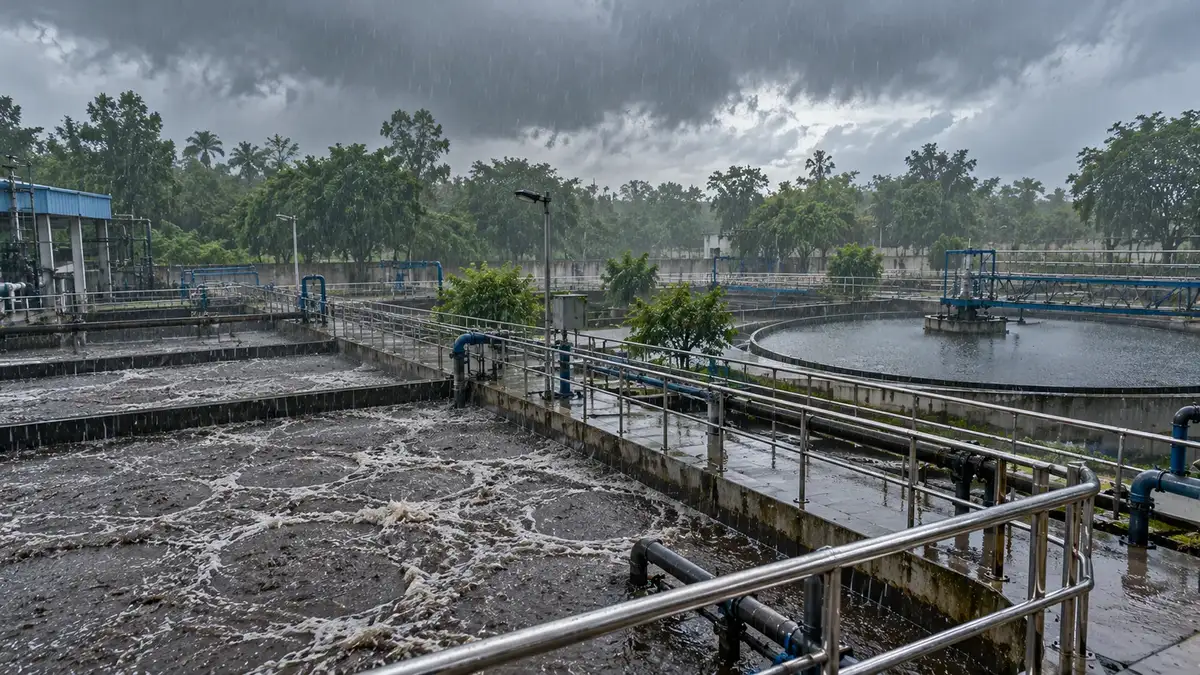
What to do: review a full year of operating data, not just recent weeks. Plan seasonal adjustments to polymer, feed rates, monitoring frequency and maintenance in advance, and check before June that thickeners and sludge storage can cope with monsoon flows.
Cause 10: You are measuring the wrong indicator
Judging a dewatering system on cake moisture alone is a common mistake. A machine producing a slightly wetter cake may still cost less overall if it uses less polymer and power, needs less maintenance and runs more reliably. The objective is the lowest overall cost with reliable operation, not the driest sludge possible. Plants that optimise only for moisture often raise energy, chemical or maintenance costs without need.
Track a balanced set of indicators, and look at trends rather than single readings:
| KPI | Why it matters |
|---|---|
| Feed solids concentration | Shows thickening performance and the load on the dewatering unit |
| Cake solids (%) | Measures dewatering effectiveness |
| Polymer consumption (kg per tonne dry solids) | Tracks conditioning efficiency |
| Filtrate quality / solids capture | Shows how much solid is being returned to the plant |
| Throughput | Measures processing capacity |
| Specific energy consumption | Tracks operating efficiency |
| Availability and downtime | Reflect maintenance effectiveness and reliability |
| Disposal cost per tonne of dry solids | Measures the financial impact of dewatering performance |
Cause 11: Your disposal requirements changed, but your dewatering strategy didn’t
Many plants chase drier cake without asking why they need it. The answer lies outside the dewatering room. The TSDF may have tightened acceptance, transport distances may have grown, or the sludge may now go to cement kiln co-processing instead of landfill. Each route has its own needs.
CPCB’s protocol for common hazardous waste TSDFs, for example, lists the paint filter liquid test among the analyses on incoming waste, and waste that fails landfill criteria goes for treatment or stabilisation first.
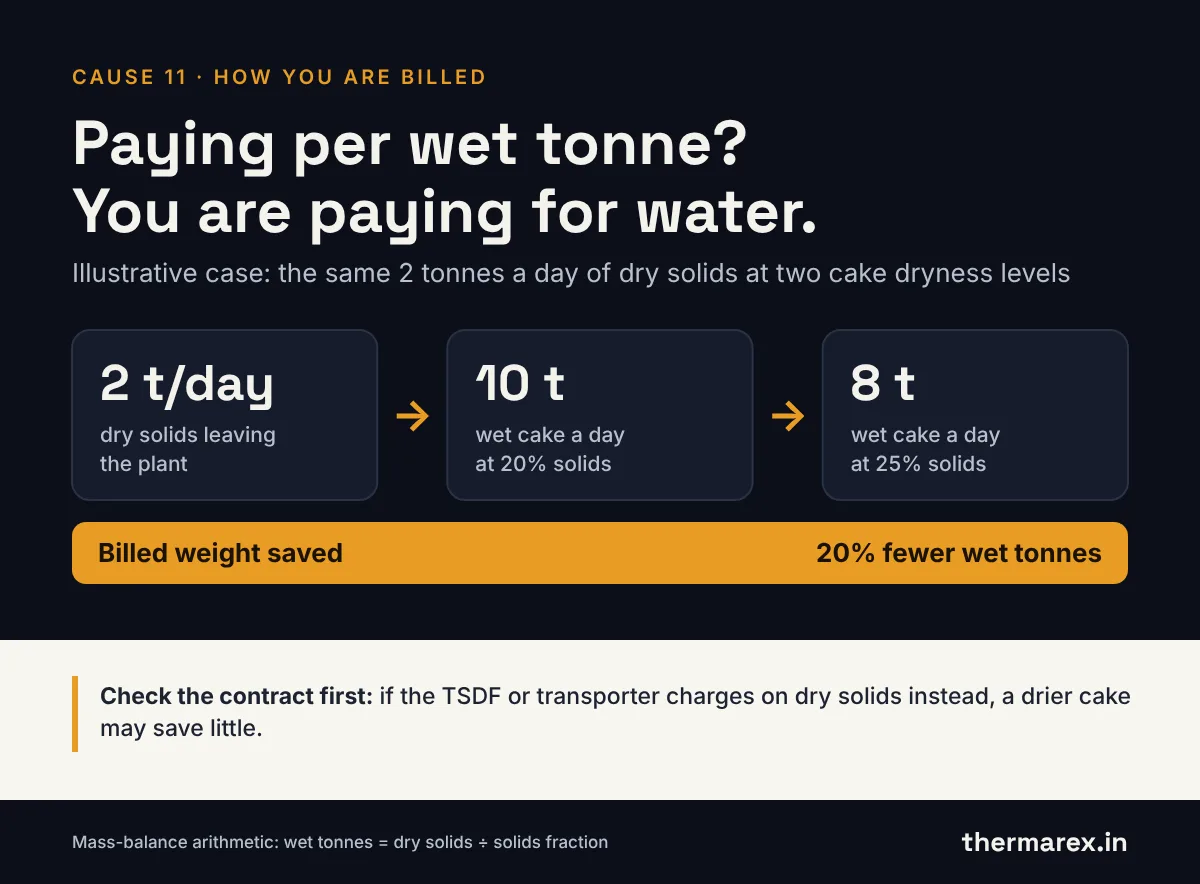
How you are billed matters as much. If your TSDF or transporter charges per wet tonne, you pay for every tonne of water in the cake. Take an illustrative case: 2 tonnes a day of dry solids leave the plant as 10 wet tonnes at 20% solids, but only 8 wet tonnes at 25% solids. That is 20% less billed weight, which you can set against the cost of getting there.
If, on the other hand, the contractor charges on dry solids, further investment in cake dryness may save little, and a planned larger press may not pay back.
What to do: look at the whole sludge chain. Ask what the disposal facility actually requires, whether you pay by wet weight, dry solids or volume, whether extra drying is justified, and whether another route would be cheaper. Our article on industrial sludge disposal cost walks through the numbers, and our sludge recycling and disposal services can help find a better route.
Cause 12: You are treating symptoms instead of root causes
This is the most expensive mistake. When performance falls, plants raise the polymer dose, slow the machine, increase pressure, change screens or swap operators. These moves sometimes help for a while, but unless the underlying cause is found, performance drops again.
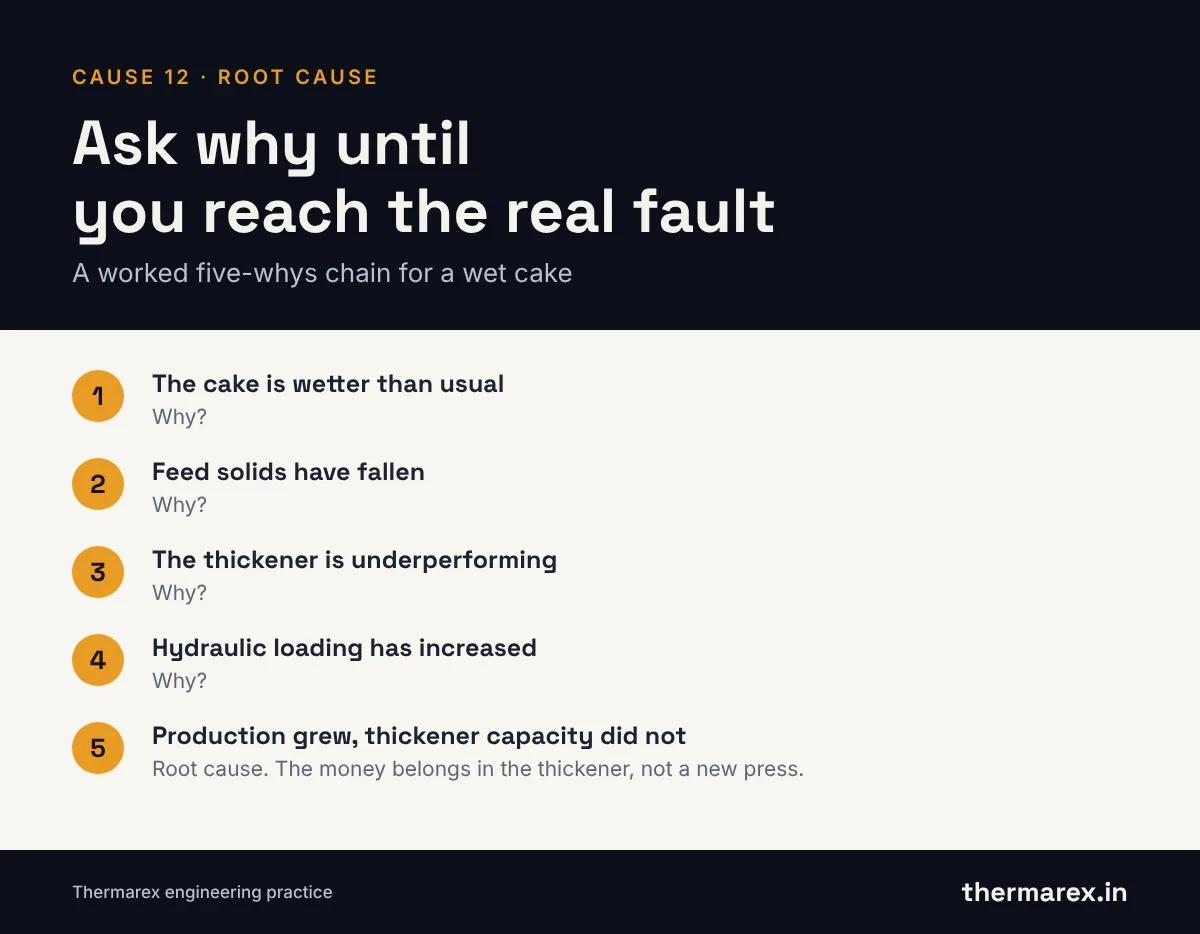
The “five whys” method keeps the investigation honest. The cake is wetter than usual. Why? Feed solids have fallen. Why? The thickener is underperforming. Why? Hydraulic loading has increased. Why? Production expanded without any increase in thickener capacity. The dewatering machine was never the problem, and the money belongs in the thickener, not a new press.
Troubleshooting summary
| Symptom | Likely cause | First thing to check |
|---|---|---|
| Wet cake, gradual decline | Sludge characteristics changed | Recent production, raw material and chemical changes |
| High polymer consumption | Wrong polymer or overdosing | Fresh jar tests; polymer make-up and ageing |
| Low throughput | Poor thickening or excessive feed rate | Feed solids concentration and feed rate against design |
| Light, fluffy sludge; worse settling | Biological process upset | SVI, sludge age, dissolved oxygen, nutrients |
| Unstable cake quality | Variable feed | Equalisation and sludge withdrawal schedule |
| Dryness plateau despite normal operation | Bound water limit | Whether a drying stage is justified |
| Slow decline, rising power or vibration | Equipment wear | Screens, belts, screw flights, wash-water nozzles |
| Changes with the season or monsoon | Temperature or dilution | Last year’s data for the same months |
| Disposal cost rising with steady cake | Disposal route or billing changed | How the TSDF or contractor charges |
Preventive practices for reliable dewatering
Most sludge dewatering problems show up in the data weeks before operators notice them on the belt. A few habits catch them early:
- Record feed solids, cake solids and filtrate quality daily.
- Trend polymer and energy use per tonne of dry solids every month.
- Inspect wear parts on operating hours, not on failure.
- Repeat sludge characterisation and jar tests whenever the wastewater changes significantly.
- Hold a process review once a year, and a pre-monsoon check every year.
- Train operators to report early warning signs instead of quietly compensating with polymer.
Frequently asked questions
Why has my sludge cake suddenly become wetter?
The usual causes are a change in sludge characteristics, lower feed solids from the thickener, a polymer that no longer suits the sludge, a biological upset or worn equipment. Check what changed upstream before adjusting the machine.
Should I increase the polymer dose if cake dryness falls?
Not straight away. First find out whether the sludge or operating conditions have changed and run fresh jar tests, because overdosing can make the sludge slimy and reduce water release.
Can mechanical dewatering remove all the water?
No. Presses and centrifuges remove free water, but bound water stays in the cake, so going much drier needs a thermal or solar drying stage.
How often should polymer optimisation be reviewed?
Whenever the sludge changes significantly, such as after a new product line, raw material or cleaning chemical, and as a routine check at least before and after the monsoon.
Does the monsoon affect sludge dewatering?
Yes. Stormwater ingress dilutes the influent and raises hydraulic loading, so thickeners deliver thinner sludge and polymer demand changes; compare with last year’s monsoon data and plan adjustments in advance.
Is replacing the dewatering machine the best fix for poor performance?
Usually not. Better thickening, polymer optimisation, a steadier feed and proper maintenance often restore performance, and a new machine fed the same sludge will face the same limits.
Which KPI matters most?
No single one. Track cake solids, polymer use per tonne of dry solids, throughput, energy, availability and disposal cost together, and watch the trends.
Wet cake, rising polymer bills or disposal costs that keep climbing? Share your sludge data and we will help you find the root cause, and tell you honestly whether you need better dewatering, a drying stage, or neither.
Talk to a Thermarex engineerSources: US EPA, Biosolids Technology Fact Sheet: Belt Filter Press (EPA 832-F-00-057, 2000); Vaxelaire J. and Cézac P., “Moisture distribution in activated sludges: a review”, Water Research 38 (2004) 2215–2230; CPCB, Protocol for Performance Evaluation and Monitoring of Common Hazardous Waste TSDFs (2009); Thermarex project data, Bhilosa Industries, Silvassa.
